


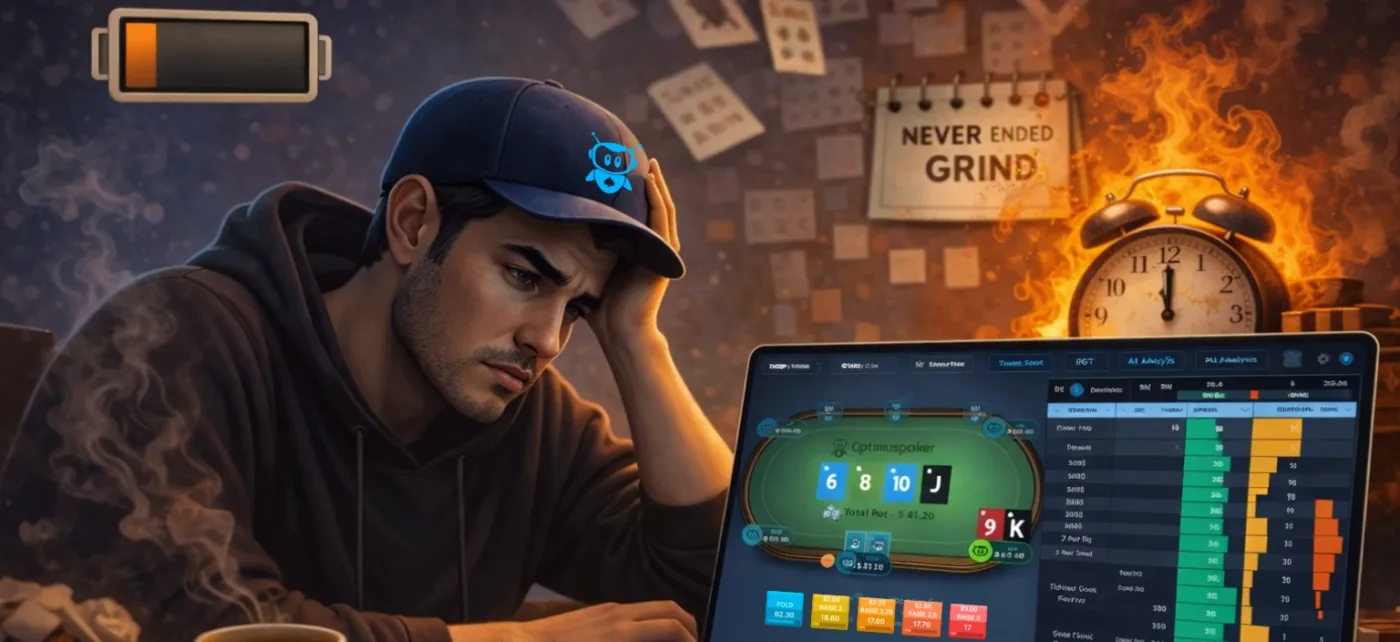
Poker Grinder Burnout: Discipline to Exhaustion
Poker grinder burnout is one of the most common experiences among serious players, yet it remains one of the least openly discussed topics in the poker world.. Many players assume burnout only happens when someone loses motivation or stops caring. But in reality, the opposite is often true. Burnout usually appears in the most disciplined poker player, the one who studies consistently, plays long sessions, and genuinely wants to improve.
The reason is simple: playing poker is not only a strategic challenge. It is also an emotional environment that constantly tests your ability to stay stable under uncertainty. The grind demands technical clarity, but it also demands emotional sustainability. Without both, discipline slowly turns into exhaustion.
This article is part of our collaboration with El Poker Zen, a poker influencer and mindset coach who focuses on helping grinders build a healthier long term relationship with the game. Throughout this piece, we will explore the causes of burnout, why poker burnout feels uniquely intense compared to other competitive card games, and how structured learning through Optimus Poker can reduce stress while mindset coaching helps players stay grounded.
The Grinder Belief: “If I Study More, I’ll Feel in Control”
Almost every grinder begins with the same assumption. When you lose a big pot, misplay a river, or feel outclassed in high stakes environments, the conclusion feels obvious: you must not know enough yet. You believe that more knowledge will finally make poker feel stable.
And in many cases, that belief is correct. Poker is a deep game, especially in modern texas hold em, where players must understand ranges, bet sizing, and how different actions interact across streets. Without structure, every poker hand becomes stressful because you are improvising under pressure.
A lack of clarity forces the brain into constant micro-conflict. Should you fold? Should you call? Should you bets or raise? Should you bluff? Every uncertain decision becomes mentally expensive. Over weeks and months, that uncertainty can feel overwhelming.
This is why structured training matters so much. Optimus Poker exists to remove guesswork and provide clear feedback through GTO bots. When you train properly, poker stops feeling like chaos and starts feeling like execution. Knowledge is not just about winning it is about reducing the mental load of confusion.
Why Poker Grinder Burnout Persists Even With Knowledge
Even once your strategy improves, many grinders still reach exhaustion. This is the moment where players realize that poker is not only difficult because it is complex. Poker is difficult because it is emotionally unstable.
Unlike most competitive games, poker never guarantees justice in the short run. You can play perfectly and still lose. You can make the right decision and still watch your opponent win the pot. Variance creates a psychological tension that no amount of theory can completely erase.
This is where poker burnout becomes deeper. The emotional system reacts to losses even when the logical mind understands variance. Over time, that constant tension becomes draining.
Professional poker player culture often celebrates toughness, but toughness without recovery becomes pressure. And pressure without rest becomes burnout.
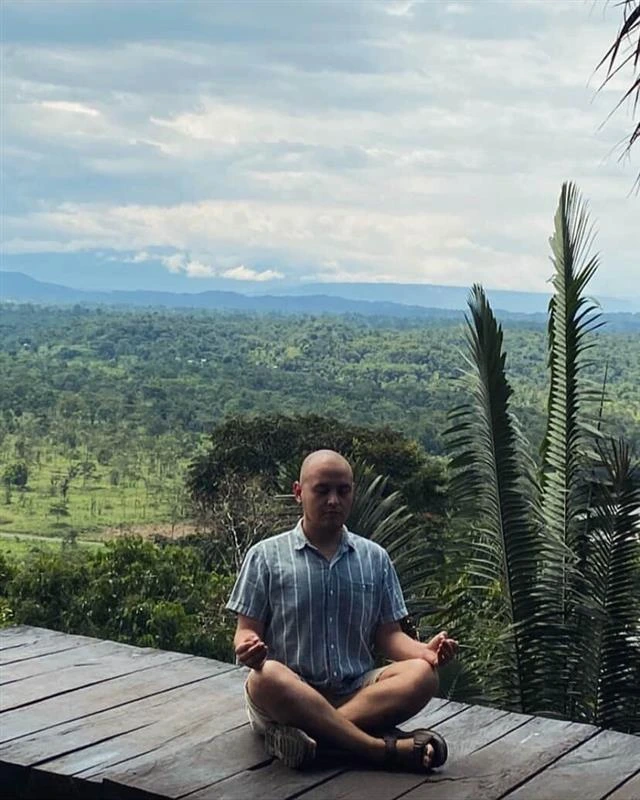
Santiago Díaz · El Poker Zen (Instagram)
Poker Grinder Burnout: When Discipline Turns Into Exhaustion
Discipline is one of the most admired qualities in poker. The grinders who review hands, study solvers, and stay consistent often improve faster than those who rely on instinct.
At first, discipline feels empowering. It gives direction. It gives progress. It creates the sense that you are building something meaningful.
But slowly, discipline can change shape. Sessions stop feeling like practice and start feeling like obligation. Study becomes pressure rather than curiosity. Poker becomes something you endure rather than something you explore.
Burnout rarely arrives suddenly. It builds quietly. The grinder keeps pushing forward, believing that stopping would mean failure. Rest begins to feel like weakness. Breaks feel like falling behind.
This is how discipline turns into exhaustion: not because the grinder stops caring, but because they care too much without a sustainable structure.
The Hidden Mental Fatigue Behind Poker Grinder Burnout
Poker creates a form of fatigue that many outsiders never understand. It is not physical exhaustion. It is cognitive and emotional depletion.
Unlike most jobs, poker has no off switch. Even after a session ends, the mind keeps running. You replay hands. You question decisions. You wonder if you missed value. You think about the long run.
Poker becomes a mental tab that never closes.
This is especially true in cash games or pot limit formats, where decisions repeat endlessly without clear closure. The nervous system stays activated because uncertainty never fully resolves.
Over time, that constant mental activation becomes exhausting.
The Emotional Tax of High Stakes and Identity
Burnout accelerates when poker becomes identity. Many grinders stop being someone who plays poker and start being a poker player in every sense. Their mood depends on results. Their confidence depends on graphs. Their self-worth depends on progress.
This is psychologically dangerous because poker is volatile. It does not provide stable validation. A downswing can feel personal. A mistake can feel like proof of incompetence.
This identity pressure becomes even stronger in environments like Las Vegas, the United States poker scene, or social media communities where success is constantly displayed and compared.
Grinding becomes survival rather than craft.
Optimus Poker: Reducing Stress Through Clarity
One of the most practical ways to prevent burnout is to reduce unnecessary uncertainty. When players train without feedback, every session becomes emotionally chaotic. But when players train with structure, poker becomes clearer.
Optimus Poker provides grinders with a controlled environment to sharpen decision-making. Training against GTO bots helps you understand why certain plays work. Reviewing hands removes guesswork. Improvement becomes measurable.
Clarity reduces stress because it removes constant doubt.
Poker will always involve uncertainty, but knowledge gives you a stable foundation inside that uncertainty.
GTO Poker Solver
Solve spots fast. Learn the why. Play sharper.
Run GTO solves in your browser, explore optimal lines, and turn confusing hands into clear decisions.
Poker Zen: Mindset as the Second Pillar
Even with knowledge, poker will still test your nervous system. That is why mindset is not optional. Poker Zen exists to normalize the emotional side of poker.
Mindset coaching is not about pretending poker is easy. It is about accepting that discomfort is part of the game. Variance is part of the game. Emotional turbulence is part of the game.
Sustainable grinders learn to stop fighting reality. They learn to rest without guilt. They learn to separate identity from outcomes. They learn to build a relationship with poker that supports their health condition rather than consuming it.
Conclusion: Train With Clarity, Not Survival
Burnout is not a personal failure. It is feedback. It signals that something is missing either technical clarity, recovery, or emotional framing.
Poker will always be difficult. The long term will always require discipline. But exhaustion is not inevitable.
With structured training through Optimus Poker and mindset guidance from El Poker Zen, grinders can build a sustainable relationship with the game.
The goal is not to grind endlessly.
The goal is to improve without breaking.